

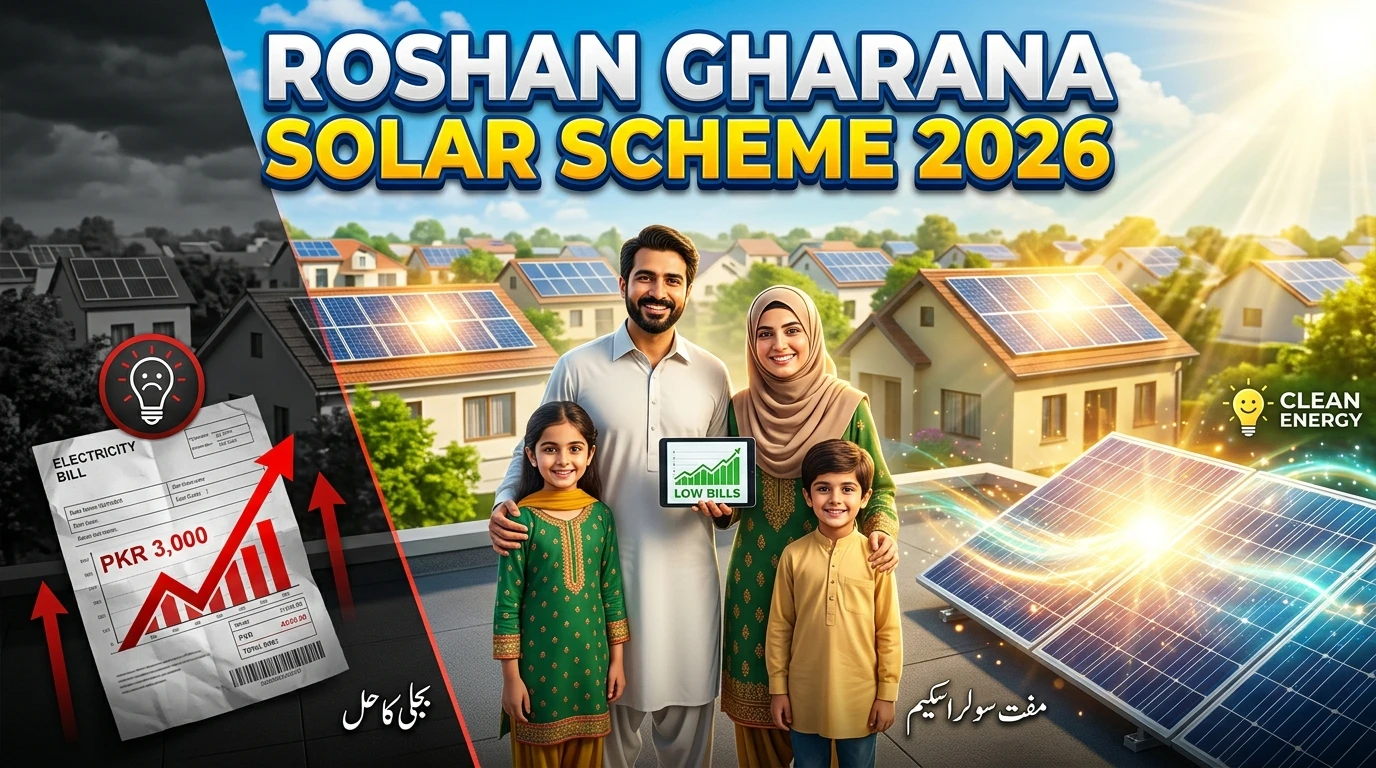
Electricity prices in Pakistan have become one of the biggest concerns for families, especially those living on limited income. In response, the government of Punjab has introduced a support initiative aimed at reducing dependency on the national grid and encouraging clean energy adoption at household level.
The Roshan Gharana Solar Scheme 2026 is one of the most talked-about energy relief programs this year. It focuses on providing solar energy systems to eligible families so they can manage basic electricity needs without heavy monthly bills.
What is Roshan Gharana Solar Scheme?
The Roshan Gharana Solar Scheme is a government-backed initiative designed to support households in Punjab by providing solar power systems at subsidized or free cost, depending on eligibility.
The core idea behind this program is simple:
- Reduce electricity burden on low and middle-income families
- Promote renewable energy usage
- Improve energy independence at household level
Instead of relying fully on grid electricity, selected households receive solar panels that generate electricity using sunlight.
Why This Scheme Matters in 2026
Energy demand in Pakistan has increased rapidly over the past few years. With rising bills and load-shedding issues, many families are shifting toward solar energy.
This scheme is important because it:
- Reduces monthly electricity expenses
- Supports rural and urban households equally
- Encourages clean and sustainable energy
- Helps stabilize pressure on national grid
For many families, even partial solar support can make a noticeable financial difference.
Eligibility Criteria (General Overview)
Not everyone can apply for this program. The selection is based on electricity usage and financial conditions.
Basic eligibility points include:
- Resident of Punjab province
- Valid CNIC holder
- Monthly electricity usage typically within low consumption range (commonly under 300 units)
- Residential connection (not commercial use)
Priority groups often include:
- Low-income families
- Widows and women-headed households
- Disabled individuals
- Residents of rural or underdeveloped areas
Application Process (How It Works)
The application method may vary depending on the phase of the program. In most cases, the government uses verified data from electricity bills and national databases.
Common process steps:
- Household data review from electricity records
- Eligibility verification through government database
- Shortlisting or selection process
- Installation scheduling for approved homes
In some phases, SMS or online registration portals may also be introduced for public convenience.
System Overview (What Beneficiaries Receive)
Below is a simplified overview of what a typical selected household may receive:
| Component | Description |
|---|---|
| Solar Panels | Basic capacity panels for home use |
| Inverter | Converts solar energy into usable electricity |
| Battery Backup | Stores energy for night usage |
| Installation | Professional setup at home |
| Maintenance Support | Limited support depending on phase |
This system is mainly designed to power basic home appliances like fans, lights, and mobile charging.
Expected Benefits for Households
Families receiving solar systems can experience multiple benefits:
- Lower electricity bills
- Backup during load-shedding
- Long-term energy savings
- Environment-friendly power usage
- Reduced dependency on grid electricity
Even a small solar setup can significantly improve daily energy stability.
Current Situation in 2026
As of 2026, the scheme is progressing in different phases across Punjab. Some areas have already received installations, while others are in verification or distribution stages.
The focus remains on expanding coverage gradually so that more households can benefit over time.
Important Things to Understand
- Selection is not guaranteed for all applicants
- Priority is given based on verified data
- Commercial or high-usage consumers are generally excluded
- Availability may differ by district and phase
It is also important to rely only on official announcements for updates to avoid misinformation.
FAQs
1. Is the Roshan Gharana Solar Scheme completely free?
It depends on eligibility. Some households may receive full support, while others may get subsidized systems.
2. Who can apply for this scheme?
Low-income residential electricity users in Punjab with limited monthly electricity consumption are generally considered.
3. How can I check my eligibility?
Eligibility is usually determined through electricity bill data and government records. In some cases, SMS or online portals may be used.
4. What can a solar system power?
Basic appliances such as fans, lights, and mobile charging can typically be powered by the provided system.
5. Is this scheme available across all cities in Punjab?
Implementation is phased, so availability may vary depending on district and program stage.
Final Words
The Roshan Gharana Solar Scheme 2026 represents a practical step toward affordable and sustainable energy in Punjab. While it may not cover every household immediately, it is gradually creating relief for thousands of families struggling with rising electricity costs.
For residents, staying updated with official announcements and ensuring accurate eligibility data is the key to benefiting from such programs in the future.